The Rainy River – A Case Study in Pollution and Recovery
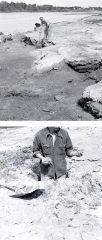
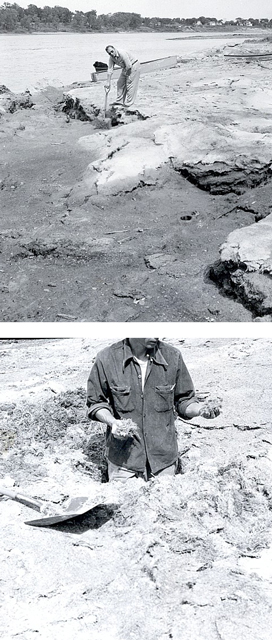 The history of the Rainy River is fascinating. How could it not be with voyageurs and lumberjacks all tangled up in it. The overlooked part of any history lesson, however, is often the timeline of environmental insults that occurred in concert with the industrial revolution and the population of the land and exploitation of its resources.
In this article, Bev Clark explores the history of the pollution and subsequent research and cleanup of the Rainy River as an example that shows what coordinated international efforts engaging the IJC can achieve.
Watershed Forum Highlights Science and Management Actions
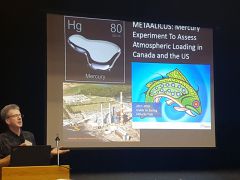
 On March 13-14, 2019 Lake of the Woods and its watershed went under the microscope at the International Rainy-Lake of the Woods Watershed Forum. Over 160 researchers and members of the public attended the symposium sessions, featuring 34 research presentations covering a wide range of topics, including studies of nutrients and algae, satellite remote sensing tools, water quality models, beavers, fish and more. There were dedicated sessions for the Canadian federal science projects on Lake of the Woods and Science at the IISD-Experimental Lakes Area.
Water Quality & Ecosystem Health Objectives Study – Update
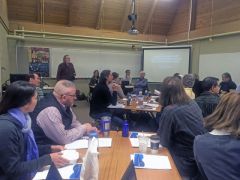
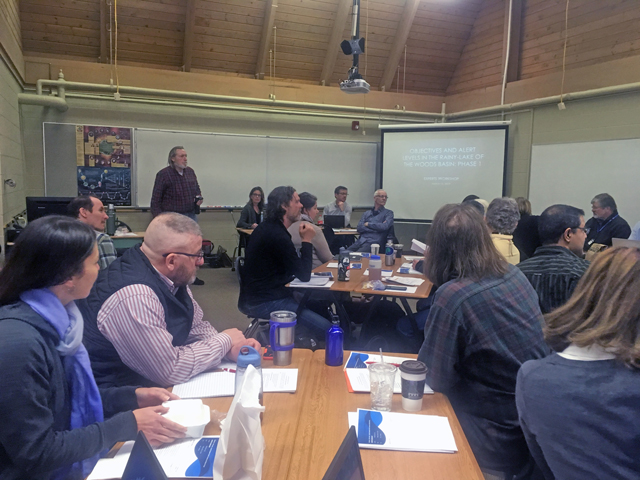 Last fall, the IJC began a study to recommend new water quality and aquatic ecosystem health objectives and alert levels for our boundary waters like the Rainy River and Lake of the Woods. Objectives require international agreement (e.g., like the phosphorus objectives agreed to by Canada and the United States for the Great Lakes). Alert levels are trigger levels for the IJC to warn governments of potential problems, for substances or issues where there are no internationally agreed upon objectives.
ECCC Science Update: Measuring Algae Blooms from Space
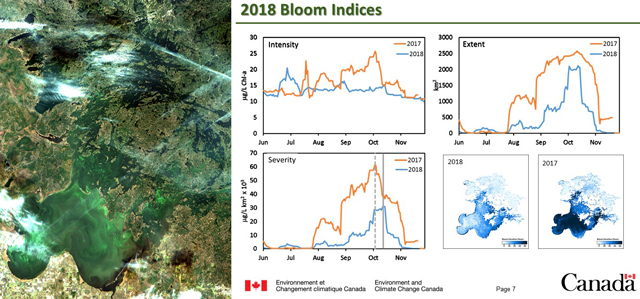 The satellite view from space is compelling of blue green algae blooms covering Lake of the Woods. Dr. Caren Binding of ECCC is harnessing these images for near real-time tracking of algae blooms and to develop indices of bloom severity, intensity, extent and duration. These indices may prove to be very useful in monitoring and measuring the effectiveness of efforts to cutting phosphorus to reduce harmful algae blooms.
Profiles of this project and the other science projects underway by Environment and Climate Change Canada on Lake of the Woods are available at the Foundation’s website: www.lowwsf.com/eccc-science.
Canada and the U.S.A Appoint New IJC Commissioners
 At a meeting of the International Joint Commission (IJC), Canadian Commissioners Pierre Béland, Merrell-Ann Phare and F. Henry Lickers made a solemn declaration to faithfully and impartially perform the duties assigned under the Boundary Waters Treaty. Also announced was that the appointments of Jane Corwin as US Section chair, and Robert Sisson and Lance Yohe as US Section Commissioners has been confirmed by the US Senate.
Read the full announcements:
Minnesota’s Plan to Cut Phosphorus: Update
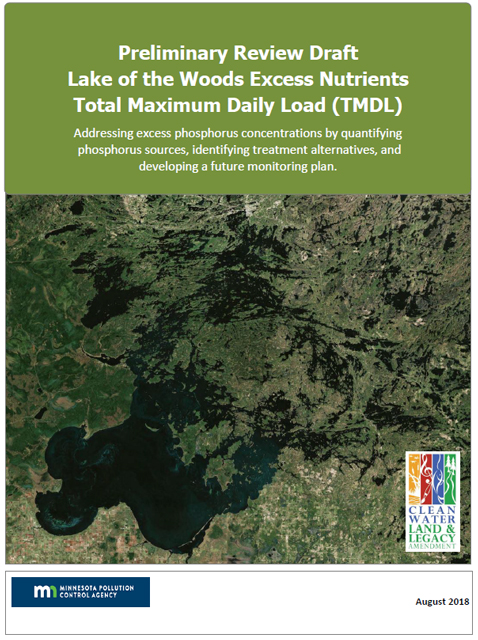 Minnesota’s plan to cut phosphorus entering Lake of the Woods was submitted to US EPA for review last fall as the first step in the approval process. The MPCA is currently responding to the federal review, prior to taking the plan forward through a formal public consultation period, anticipated for later this summer. We’ll keep you informed via the Foundation’s website and e-news about progress on the Minnesota plan and opportunities for public input.
Watch for word coming out for public meetings in Minnesota (International Falls, Baudette and Warroad) and a WebEx online conference for folks in Canada and others who cannot attend in person.