
How You Can Help

 Your help now will ensure that we maintain the momentum for our lake. Sign up at the Foundation’s website to show your support and receive our email updates, including notices of upcoming consultations on ecosystem and phosphorus objectives with Environment and Climate Change Canada.
Please consider donating to the Foundation www.lowwsf.com/donate.
For U.S. donors requiring a receipt for U.S. tax purposes, see www.lowwsf.com/donate-usa for U.S. donor instructions.
Your gift will help make sure that Lake of the Woods is a priority with governments, that research is completed and that a sustainability plan is developed and implemented to restore and protect the water quality of Lake of the Woods.
Satellite Monitoring of Algal Blooms – Tools Now Available to Scientists and the Public
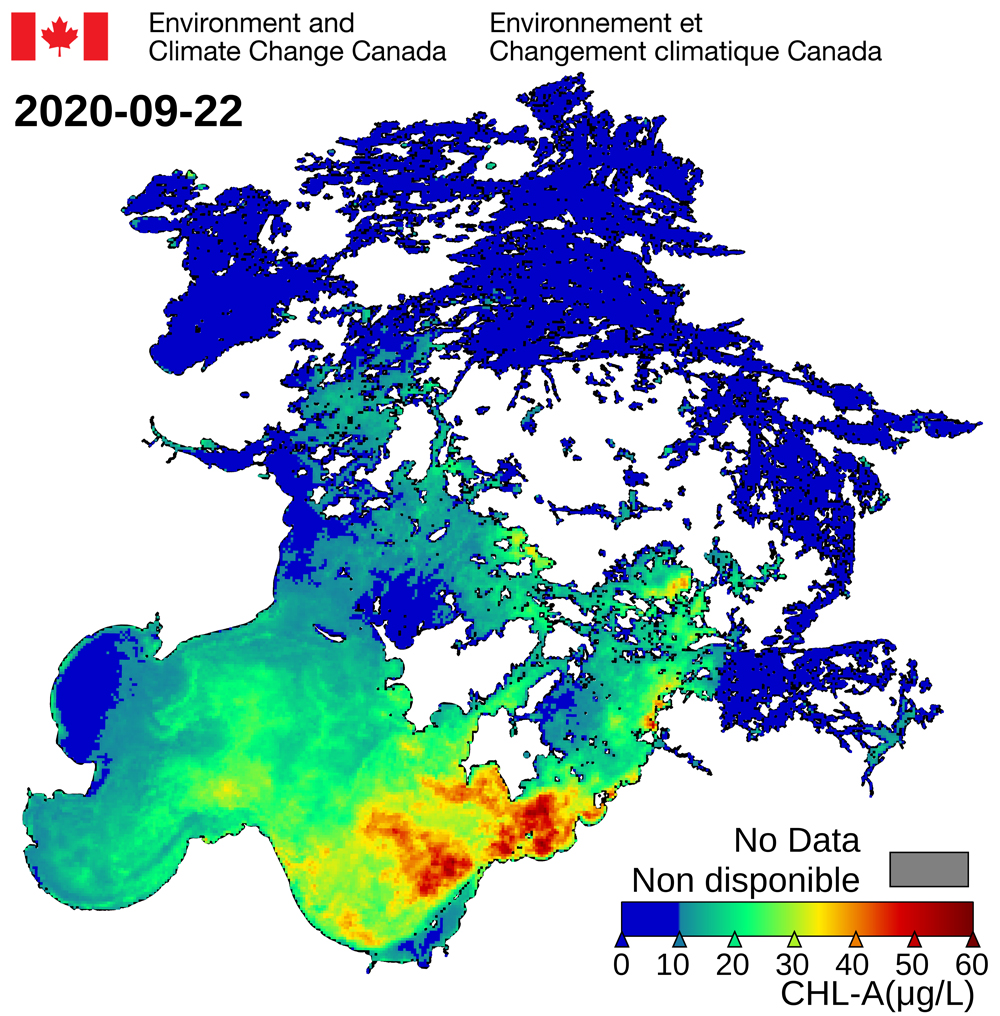
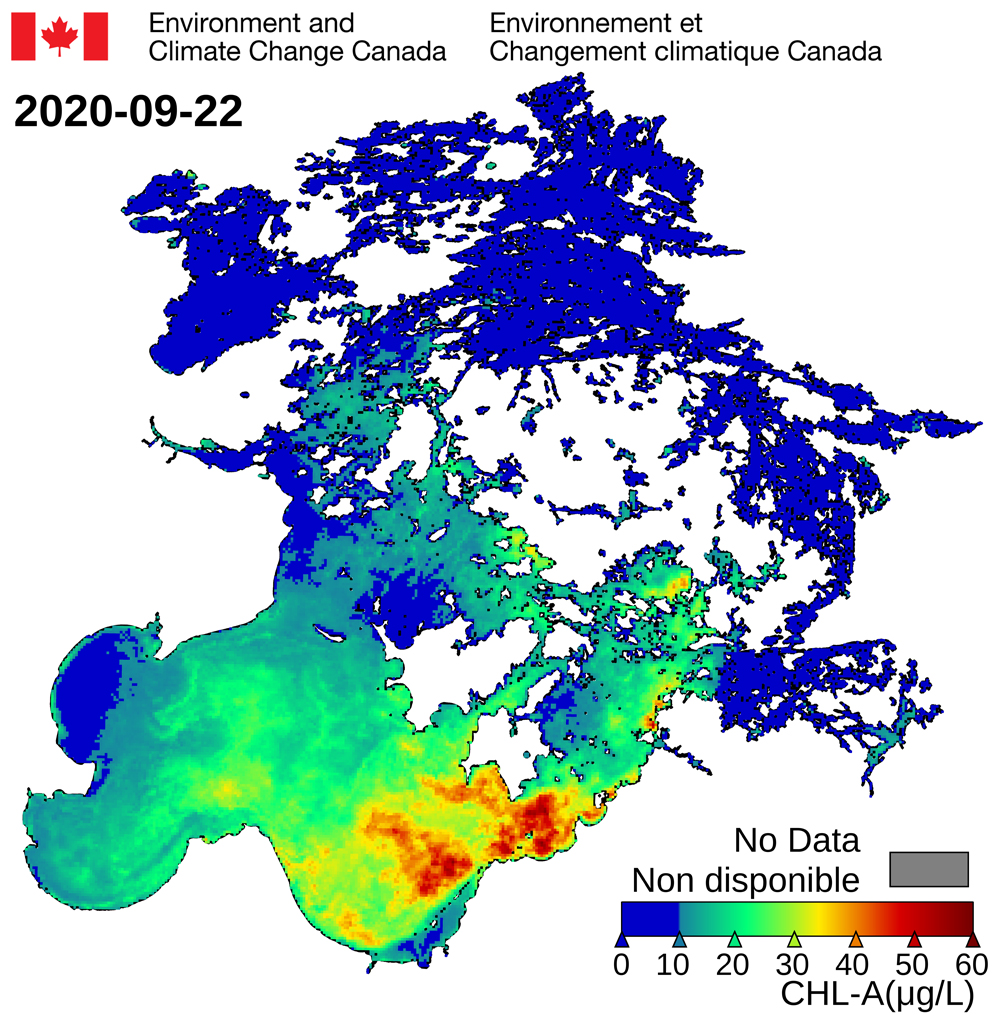 This is really good stuff — check it out! We’ve all seen the compelling satellite pictures of blue green algae blooms covering Lake of the Woods. Now there’s a way for you to see them in near real time and also how they can be used.
Dr. Caren Binding of ECCC has harnessed these images for near real-time tracking of algae blooms and has developed indices of bloom severity, intensity and extent across the lake. These indices will be extremely useful in monitoring and measuring the effectiveness of efforts to cut phosphorus to reduce harmful algae blooms.
Dr. Binding has also launched an online tool (ECCC’s EOLakeWatch), that provides a suite of website interactive tools for algal bloom monitoring for Lake of the Woods, Lake Winnipeg and Lake Erie. You can also sign up to receive periodic bloom reports or follow Dr. Binding / EOLakeWatch on Twitter.
Trent University Research Focuses on Phosphorus from Canadian Streams with Grant from LOWWSF
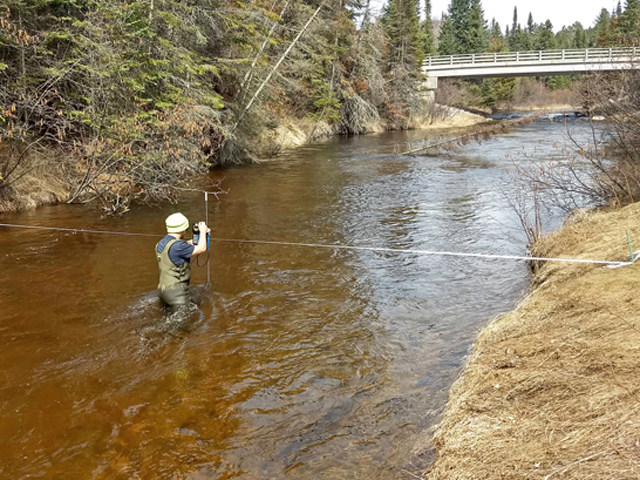
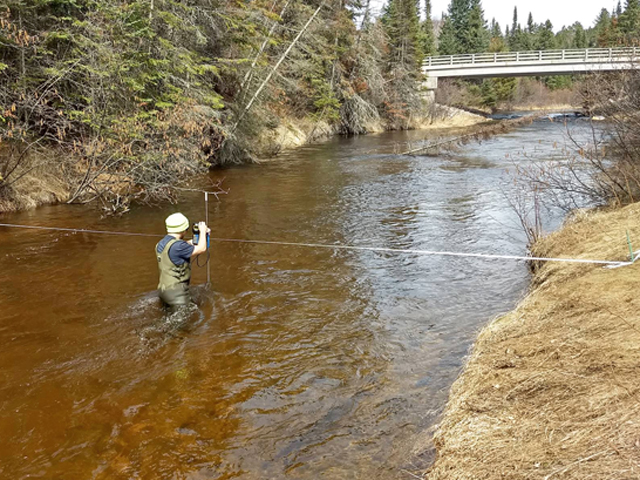 LOWWSF is providing a grant to Trent University researchers working to quantify nutrient (primarily phosphorus) loading from tributaries to Lake of the Woods and the Rainy River from the Canadian portion of the basin.
The research team, led by Dr. Catherine Eimers, continued this work this summer, with much of the heavy lifting being done by MSc. candidate Andrew Williams. We expect the results of Andrew’s work to be extremely useful in identifying concrete actions that can be taken to reduce phosphorus loading to Lake of the Woods, to combat the harmful algal blooms.
Andrew’s thesis research is being supported by the grant from the Lake of the Woods Water Sustainability Foundation to Trent University, with matching funds from Mitacs, a not-for-profit organization that supports training of researchers in Canada.