2023 Watershed Forum Proceedings Report – Get Your Copy Now!
 The Proceedings Report of the 2023 International Rainy-Lake of the Woods Watershed Forum is available for download at the Foundation’s website: lowwsf.com/forum-proceedings. Held March 8-9 in International Falls Minnesota, 132 researchers, resource managers, policy makers, and members of the public put Lake of the Woods and its watershed under the microscope.
The report covers a wide range of subjects – Many of the 25 presentations this year focused on knowledge and tools that will inform management actions. The schedule was full, with research presentations split among six sessions covering a wide range of disciplines including: water quality management and monitoring, watershed management, nutrients and algal blooms and toxins, and emergent technologies for remote sensing and monitoring.
2023 Kallemeyn Award – Mike Hirst
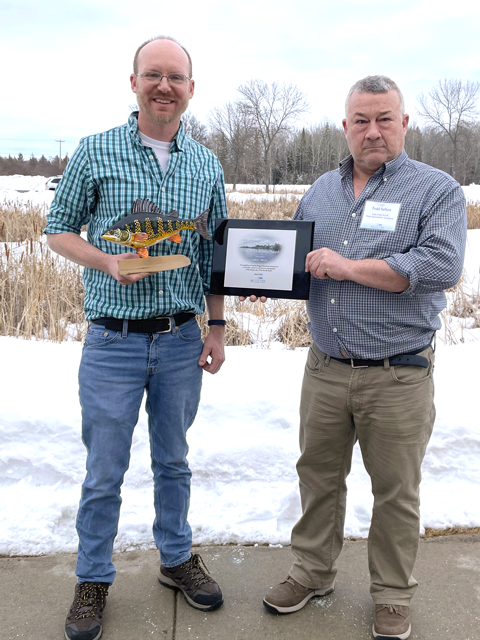
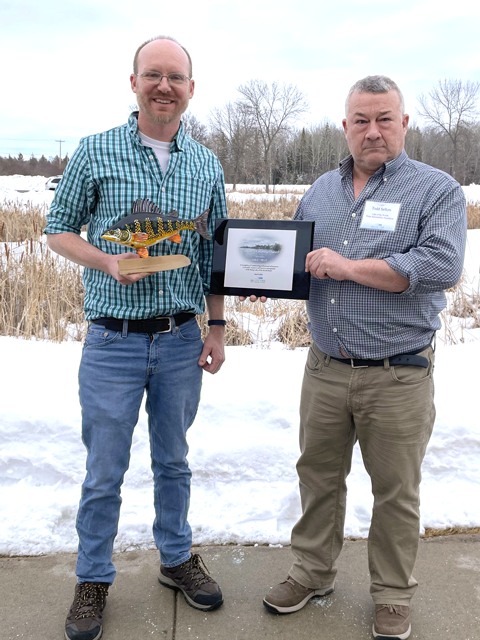 Mike Hirst, Resource Conservationist with the Lake of the Woods Soil and Water Conservation District is the 2023 recipient of the Kallemeyn Award, recognizing his outstanding professional achievements and contributions to collaborative research and resource management in the Rainy-Lake of the Woods Basin.
The Kallemeyn Award was presented to Mike by the Lake of the Woods Water Sustainability Foundation on behalf of the community of scientists and resource managers from the United States and Canada attending the 2023 International Rainy-Lake of the Woods Watershed Forum in International Falls, MN.
Teika Newton Joins LOWWSF as International Watershed Coordinator
 The Lake of the Woods Water Sustainability Foundation is pleased to introduce Teika Newton as the new International Watershed Coordinator.
Teika is a long-time participant in regional watershed science, policy, and governance activities. She has served as a board member for the International Joint Commission’s International Rainy–Lake of the Woods Watershed Board, and co-chaired the Board’s Community Advisory Group, Engagement Committee, and currently the Adaptive Management Committee. Teika also has been helping to guide the IJC Board’s work on climate adaptation since 2016.
With Teika joining our team, the Foundation is doubling down to move projects forward that are central to a sustainability plan, including defining recommendations for international water quality objectives and a multi-nationally coordinated monitoring program, in collaboration with the IJC, Nations, and agencies in the basin.
Great News for Lake of the Woods In Canada’s Budget 2022


Great news! Canada’s Budget 2022, released today, includes funding that should help kickstart actions to restore the waters of Lake of the Woods. Specifically as it relates to Lake fo the Woods, Budget 2022 proposes:
- $43.5 million over five years, starting in 2022, to Environment and Climate Change Canada (ECCC) to create the new Canada Water Agency, which is to have a madate for the large rivers and lakes in Canada such Lake of the Woods.
- $19.6 million in 2022-23 to ECCC to a Freshwater Action Plan (the future after 2023 of this initiative will be announced later) — This funding will support clean up efforts in our major waters – specifically including Lake of the Woods, along with the Great Lakes, the St. Lawrence River, Lake Winnipeg, the Fraser River, the Saint John River, the Mackenzie River, and Lake Simcoe.
In 2019, the Canadian government committed to establish a federal Canada Water Agency to work with provinces, territories, Indigenous communities, and other stakeholders in order to find the best ways to keep Canada’s water safe, clean, and well-managed. Budget 2022, committs that the CWA will be up an running this year (2022). We expect that this will move our objectives of developing an plan for Lake of the Woods forward, with phosphorus pollution reduction targets to address toxic algae in the lake.
A Look at How Water Quality Varies Throughout Lake of the Woods
By Bev Clark, for the Lake of the Woods Water Sustainability Foundation
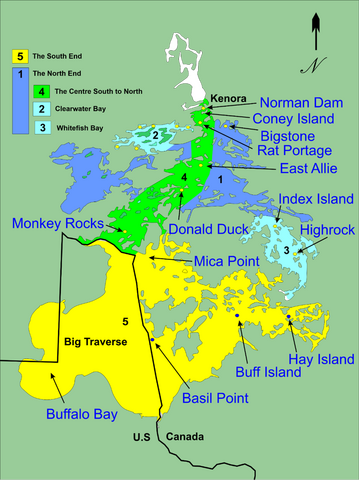
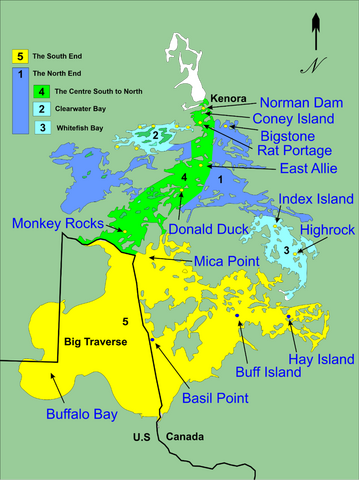 In this article, Bev Clark, takes a look at the tremendous variation in total phosphorus (TP), as a measure of water quality, across the vast expanse and five distinctly different areas of Lake of the Woods. Phosphorus is the primary nutrient that supports the growth of algae, and in excess can lead to sever blooms, widespread across much of the lake. Bev graphically presents average and ranges in TP for each lake area and discusses reasons for the diffenences and relatioship to the risks of developing algae blooms.
Bev Clark is one of the co-editors of the recently-released 2022 Rainy-Lake of the Woods State of the Basin Report, and this article summarizes a small aspect of the information from it.
Thank You to Art McKenzie – a Lake of the Woods Ambassador
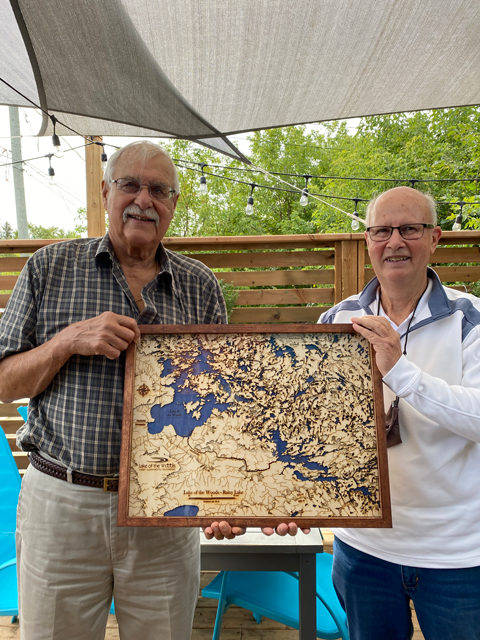
Heartfelt thank you to a true Lake of the Woods ambassador, Art McKenzie
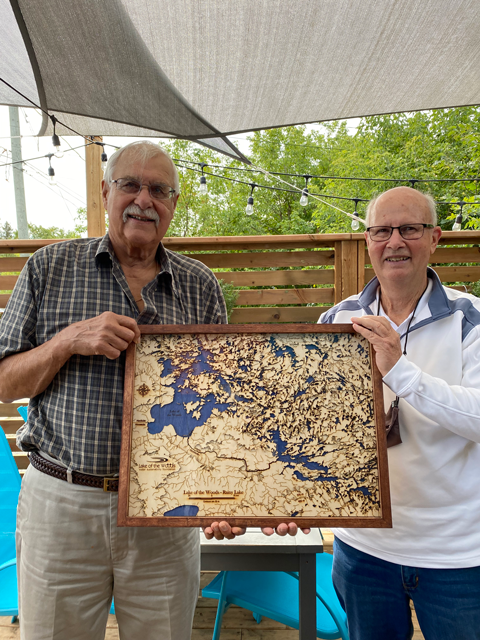 A huge “thank you” to Art McKenzie for his decades of volunteer service to Lake of the Woods, as a founding Director and Treasurer of the Lake of the Woods Water Sustainability Foundation, and before then, a long time Director and President of the Lake of the Woods District Stewardship Association.
Last fall, LOWWSF Directors met with Art to thank him in person — a ceremony delayed by COVID restrictions since Art’s retirement from the Foundation Board in June 2020. Tony Stephens, President of the Foundation, presented Art with a retirement gift honouring his contribution to our international lake and its watershed – a wood-cut map of the entire Lake of the Woods watershed.
From all of us at LOWWSF, a giant “thank you” to Art and best wishes for life in retirement at the lake!
2022 Watershed Forum Proceedings Report – Get Your Copy!
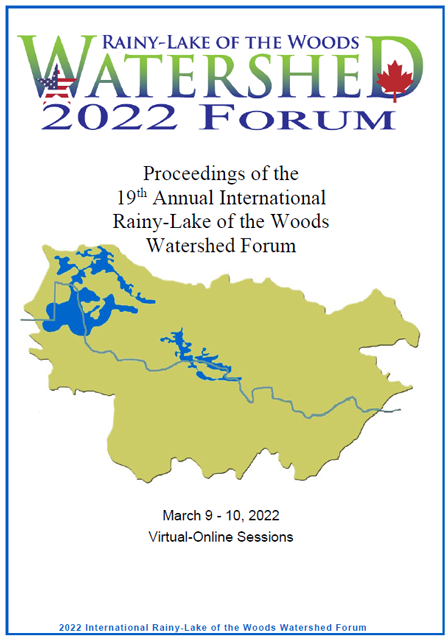
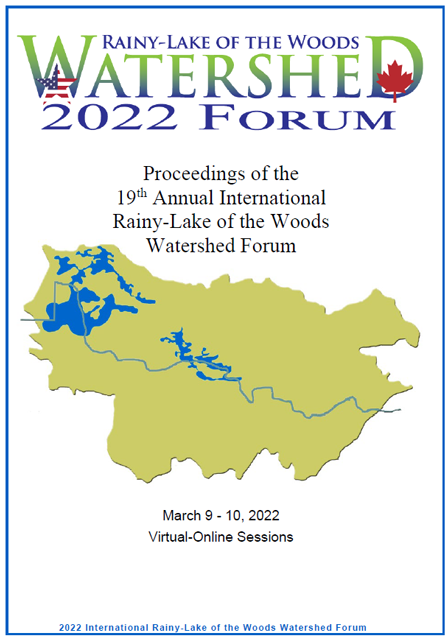 The Proceedings Report of the 2022 International Rainy-Lake of the Woods Watershed Forum is available for download at the Foundation’s website: lowwsf.com/forum-proceedings. Held March 9-10 as a virtual online event, 144 researchers, resource managers, policy makers, and members of the public put Lake of the Woods and its watershed under the microscope. The report covers a wide range of subjects: including: water governance and Indegenous perspectives, the State of the Basin Report, nutrients & algae, invasive species, and emerging issues and technologies.
Most presentations were recorded and are available for viewing for a limited time at lowwsf.com/watershed-forum.
Please download a copy of the report or go to the website to view any presentation recordings that are of interest to you.
2022 State of the Basin Report Released – Get Your Copy Now!
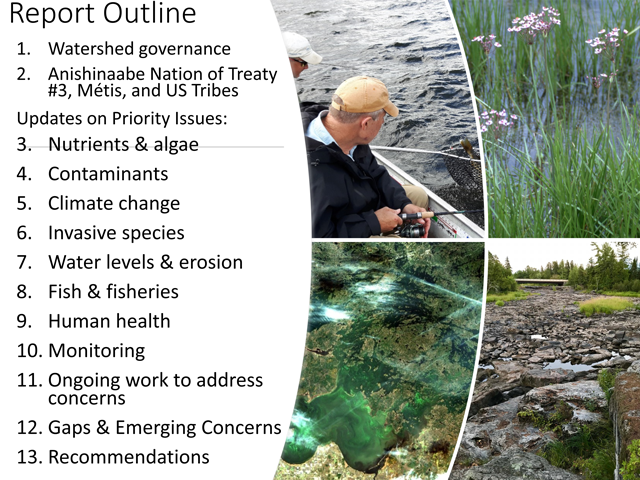
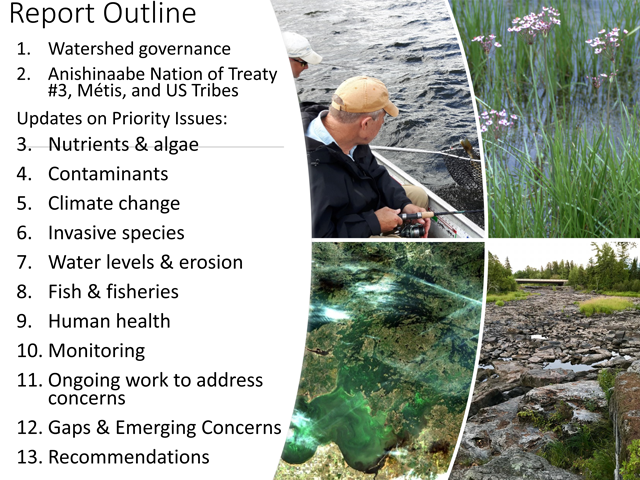 The Lake of the Woods Water Sustainability Foundation is pleased to announce the release of the 2022 Rainy-Lake of the Woods State of the Basin Report (SOBR) lowwsf.com/sobr.
The report outlines changes that have occurred since the last report in 2014, focusing on the primary areas of concern in the watershed of nutrients and algae, contaminants, climate change, aquatic invasive species, and erosion/water levels. The report also highlights concerns about the health of the walleye fishery in the north end of Lake of the Woods and includes a new chapter on human health concerns in the watershed.
The 2022 SOBR is available in two versions: a detailed technical report of 148 pages, and an overview report of 32 pages, highlighting key findings and written for a general audience. We encourage you to read the overview version and to explore additional details in the full 148-page version, both of which are available for download at the Foundation’s website, lowwsf.com/sobr.
Fall Algae Bloom Continues to Develop
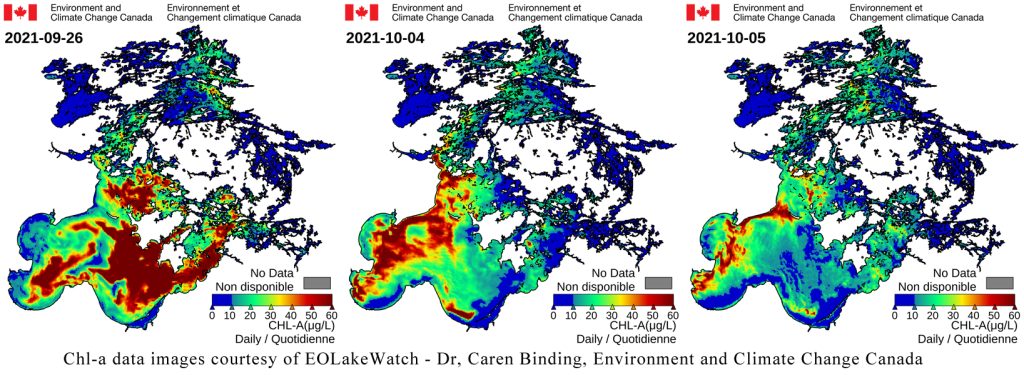
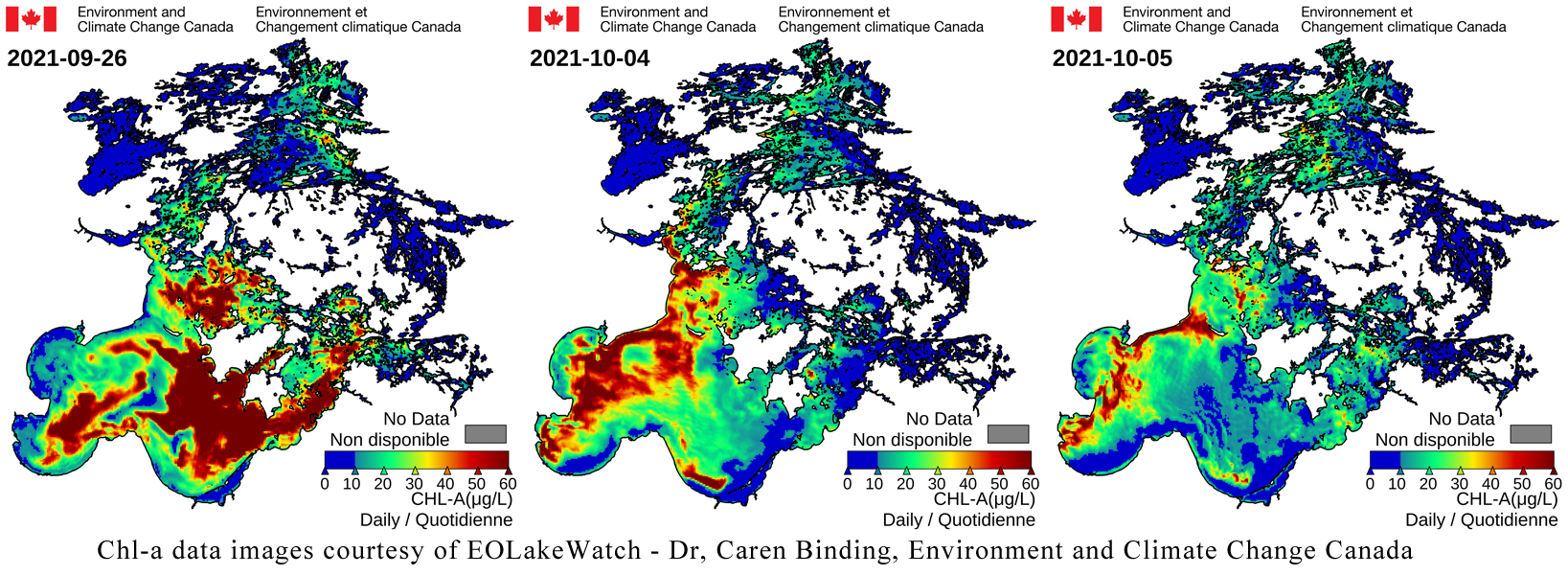
The seasonal algae bloom on Lake of the Woods is underway and has progressed up into the north end of the lake, as shown in the collage of derived chlorophyll-a data for Sept 26 through Oct 5 (data imaged courtesy of EOLakeWatch, Dr. Caren Binding ECCC). The bloom has now developed in the northern part of the lake through to the Kenora area, and as can seen in the Chl-a data for Oct 4 & 5, the bloom is even present in the Ptarmigan channel / bay area of the “Clearwater” complex of bays. However, the blooms in these lower nutrient isolated bays may be a result of the strong shift…
Canada’s water quality monitoring back on Lake of the Woods this fall
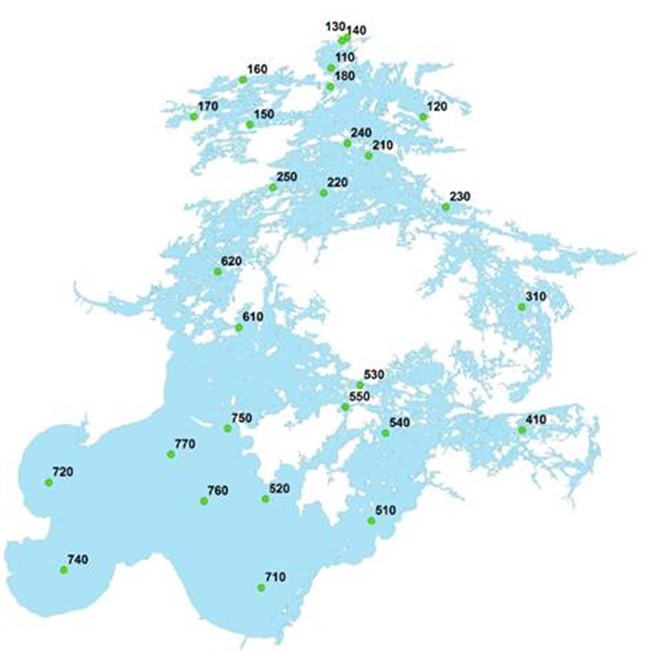
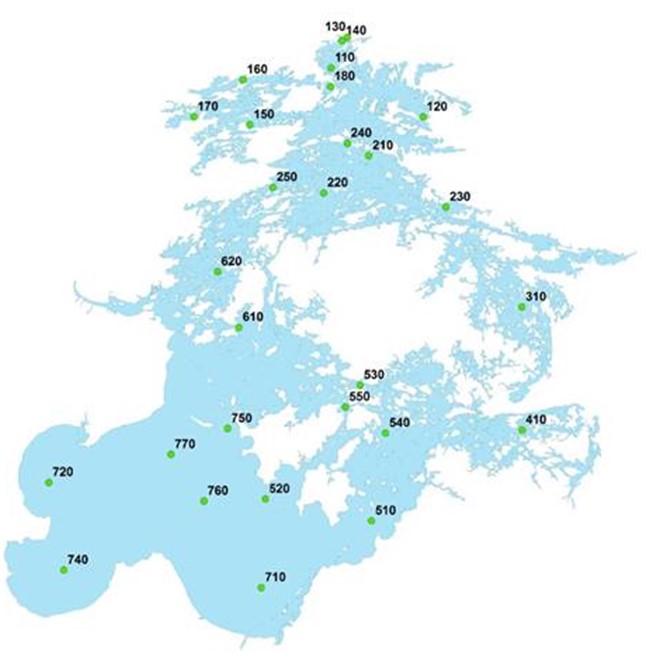 Environment and Climate Change Canada’s team responsible for sampling water quality on Lake of the Woods was out this September doing a lake-wide survey of 28 sites (see map). Water quality sampling had been paused last year due to Covid restrictions. In addition, they re-initiated their long-term monitoring of the Rainy River inflow to Lake of the Woods and the Winnipeg River outflow.
At each site, water quality parameters measured included: phosphorous, nitrogen, carbon and their various forms, total and dissolved metals, major ions, Chlorophyll a, Phycocyanin (an algal pigment found in blue-green algae), total suspended solids, algal toxins and taxonomy, secchi depths, dissolved oxygen, pH, turbidity, conductivity and temperature.