2024 Watershed Forum Proceedings Report – Get Your Copy Now!
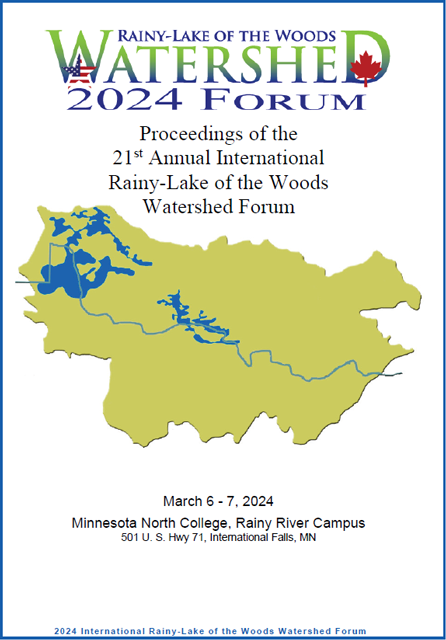
 The Proceedings Report of the 2024 International Rainy-Lake of the Woods Watershed Forum is available for download at the Foundation’s website: lowwsf.com/forum-proceedings. Held March 6-7 in International Falls Minnesota, 142 researchers, resource managers, policy makers, and members of the public put Lake of the Woods and its watershed under the microscope.
The Forum featured a moderated panel discussion on “From Science to Action” and 26 presentations in themes of: watershed governance, ecosystem modeling, contaminants and mining, ecological interactions, nutrient dynamics as drivers of cyanobacteria and cyanotoxin production, nutrient and sediment load tracing, and updates on the major monitoring programs of the MPCA and ECCC.
Fred Desjarlait, spiritual advisor from Miskwaagamiiwi – Zaagaiganing (Red Lake Nation), joined by Métis Senator Karen Cederwall, helped open the Forum, followed by addresses from Terry Duguid, Parliamentary Secretary and Special Advisor on Water to the Prime Minister and by US Consul Marilyn Gayton.
2024 Wilson Stewardship Award – Paul Anderson
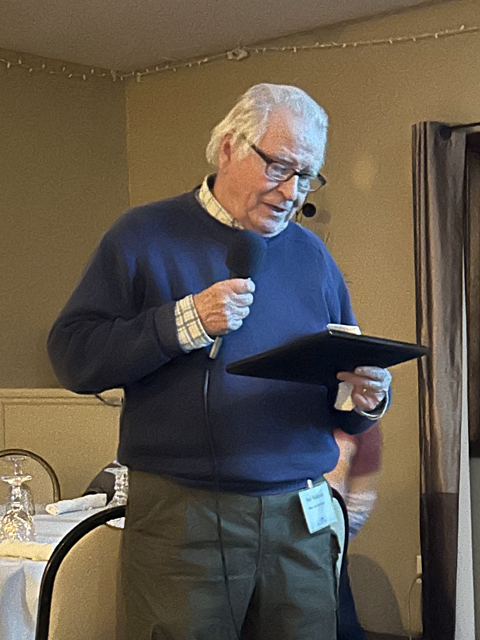
 Paul Anderson is the 2024 recipient of the Gerry Wilson Stewardship Award. Paul was honored with this international award in recognition of his lifetime of environmental advocacy work on behalf of the Rainy Lake Conservancy, Voyageurs National Park and Voyageurs Conservancy and his service on the Community Advisory Group of the IJC International Rainy-Lake of the Woods Watershed Board.
The Lake of the Woods Water Sustainability Foundation presented the award to Paul on behalf of the community of scientists, resource managers and water stewards from the United States and Canada at the 2024 International Rainy-Lake of the Woods Watershed Forum in International Falls, Minnesota.
Paul personifies the best of citizen engagement in conservation and protection. A life-long lover of Rainy Lake and the Rainy Lake watershed, Paul has been an active leader and contributor to initiatives to protect the watershed, including participating in oversight of hydropower and mining projects, advocating for emergency preparedness and response planning, reviewing the past two State of the Basin Reports, and advocating for improved land use and development planning.
Congratulations to Paul on this well-deserved recognition of his volunteer contributions to our waters!
The Foundation presents the Wilson Stewardship Award annually to recognize individuals, groups, or projects that are making significant contributions to environmental stewardship in the Rainy-Lake of the Woods watershed. For more information about the Wilson Stewardship Award see: www.lowwsf.com/wilson-award.
2024 Kallemeyn Award – Caren Binding
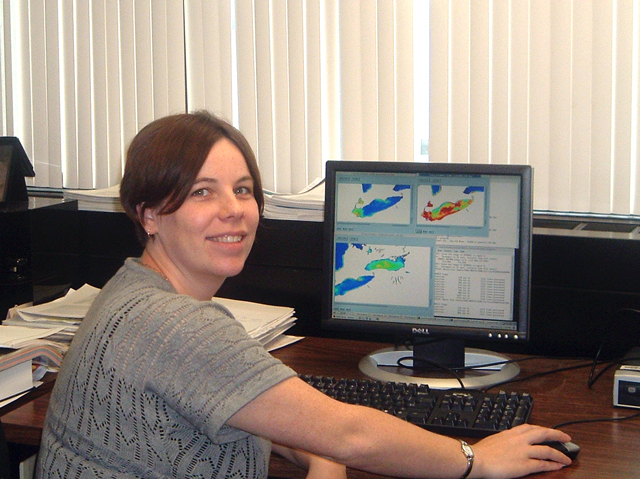
 Dr. Caren Binding, research scientist in aquatic optics and remote sensing at Environment and Climate Change Canada, is the 2024 recipient of the Larry Kallemeyn Award. The Lake of the Woods Water Sustainability Foundation presented the award on behalf of the community of scientists and resource managers from the United States and Canada working in our watershed.
 Massive algae bloom covers nearly 70% of Lake of the Woods, September 30, 2023. Panels (left to right) show sentinel satellite image, derived chlorophyll-a, and derived annual Bloom Severity index, Environment and Climate Change Canada (2023). EOLakeWatch 2023 Algal Bloom Report – Lake of the WoodsThe Kallemeyn Award recognizes Dr. Bindings outstanding scientific contributions to the watershed, including leading her team that developed the EOLakeWatch tool that uses satellite imagery to track algae blooms in Lake of the Woods (and other “Great Lakes”) and derives indices of bloom extent, intensity and severity that will likely be foundational to long term monitoring for progress assessment as plans are implemented to cut phosphorus loads to the lake.
A heartfelt thanks and congratulations to Caren from the Foundation and the researchers gathered at the Forum for a well-deserved accolade!
2023 Lake of the Woods Fall Algae Bloom Most Severe Since the Early 2000s
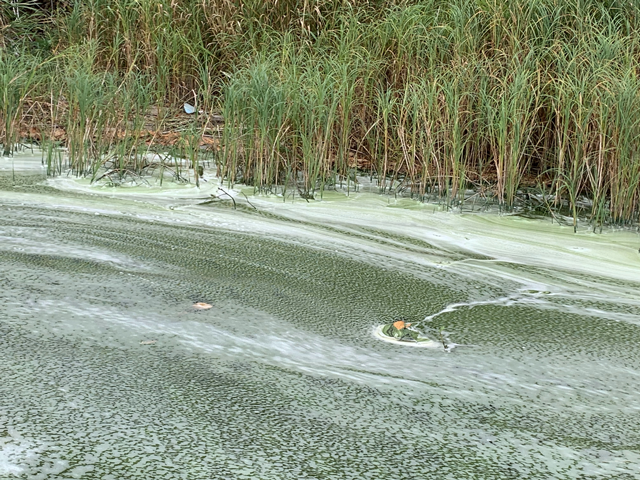
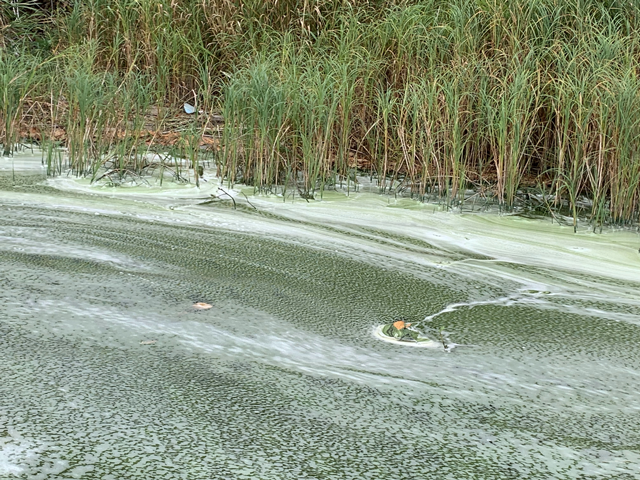 The view from space is compelling and confirms what we have seen firsthand on Lake of the Woods at the end of September. The cyanobacterial bloom (aka blue-green algae) on Lake of the Woods is tracking towards being one of the most severe since 2002.
By late September, a massive bloom extended across 2,800 km2 or 73% of the lake’s surface. The bloom was extremely intense with satellite-derived measures of chlorophyll-a concentrations exceeding 60 µg/L over most of the southern and middle basins of the lake.
Ask an Expert Full Speakers List 2023
{article id=”285″}[image-intro]
[introtext]
[readmore]{/article}
IJC Watershed Board Public Meetings Report
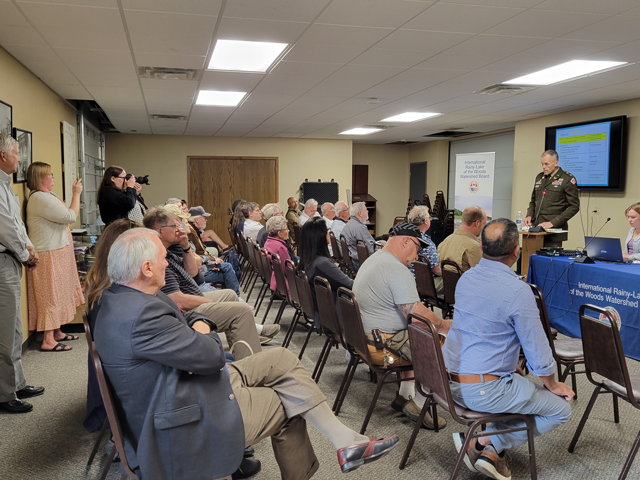
 The IJC’s International Rainy-Lake of the Woods Watershed Board held its annual meetings with the public in Baudette, Minnesota on August 16 and Kenora, Ontario on August 17.
The IJC watershed board presented an update on its activities during the past year and key priorities for the coming year. The board’s Aquatic Ecosystem Health Committee is leading several projects this year, including: focus on international water quality objectives and core monitoring design, studies of erosion at the south shore of Lake of the Woods, and reporting of exceedances of water quality criteria.
The board hosted guest updates from the Minnesota Pollution Control Agency and Environment and Climate Change Canada on these agencies’ work to address the phosphorus loading that feeds the excessive algae blooms on Lake of the Woods.
EOLakeWatch: Satellite Earth Observations for Lake Monitoring – Enhanced version coming soon!
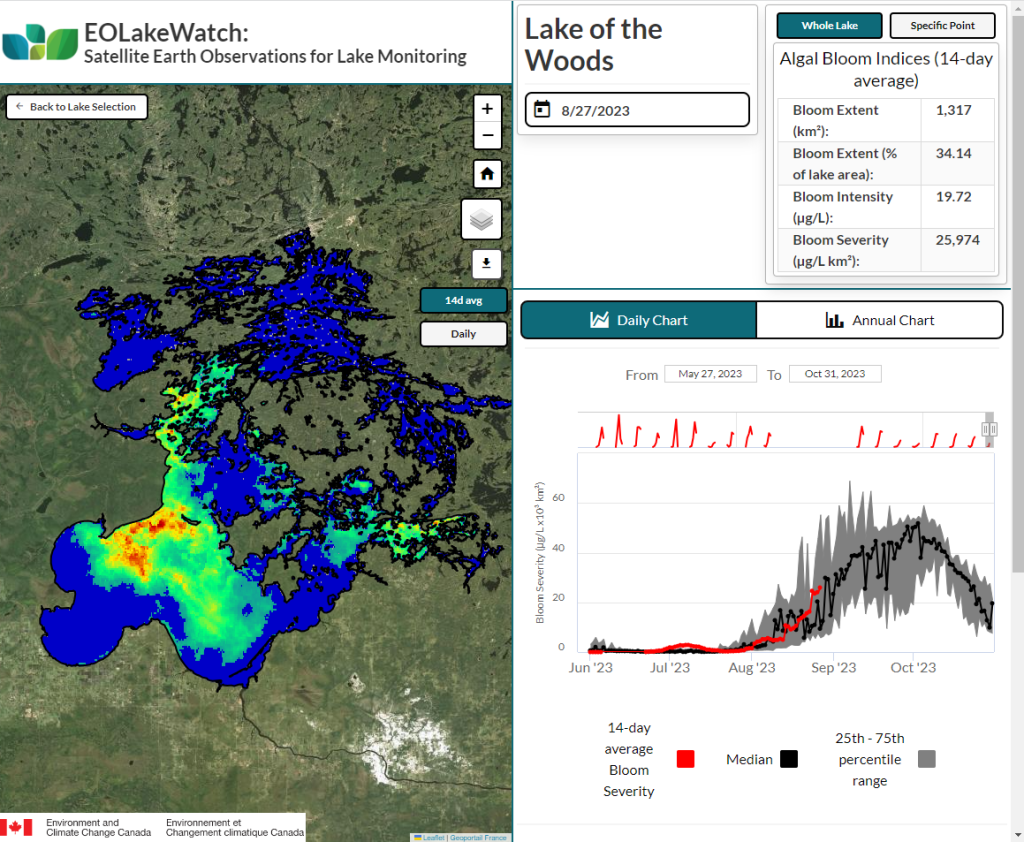
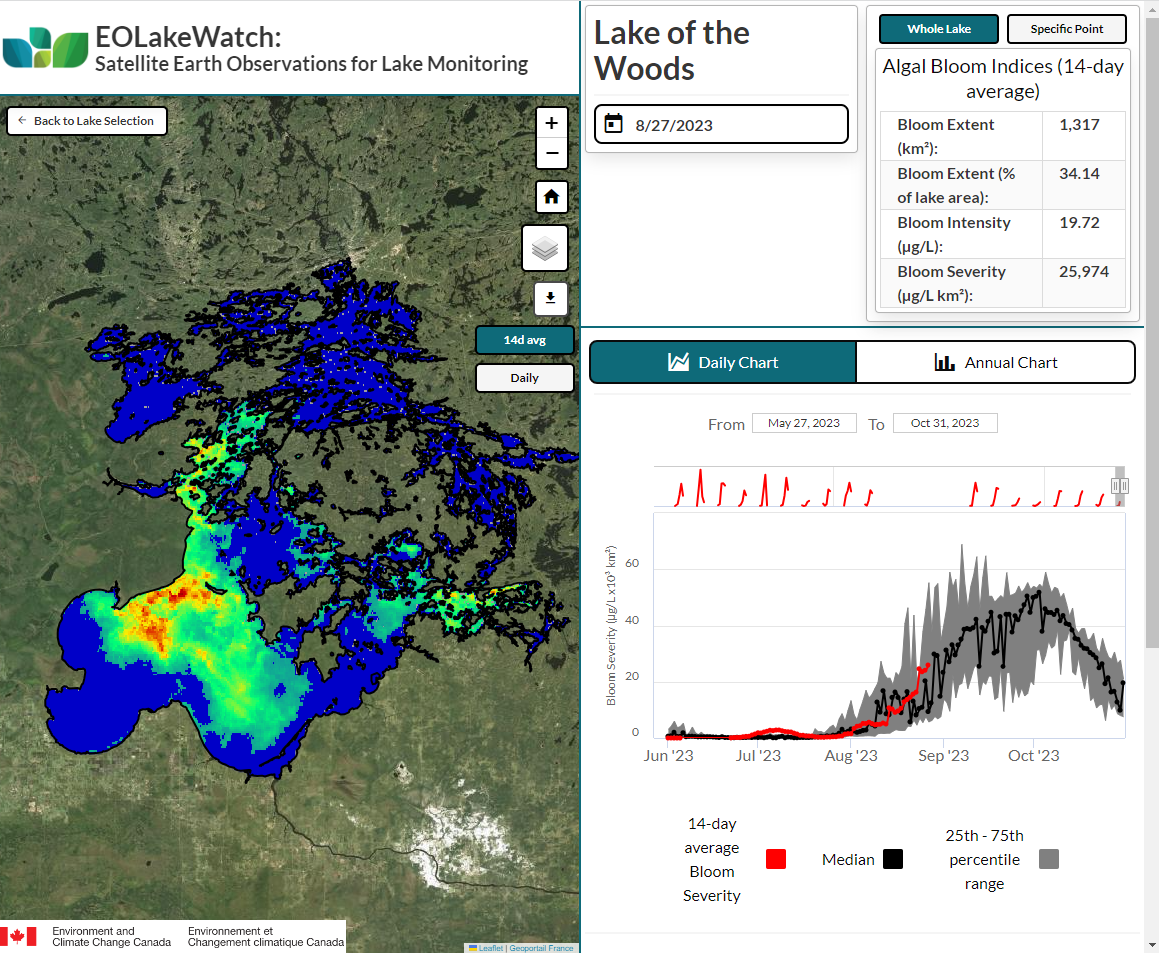 We’ve all seen the compelling satellite pictures of blue green algae blooms covering Lake of the Woods. As part of the Environment and Climate Change Canada’s Lake of the Woods Science Plan (2016-2020), Dr. Caren Binding developed a system to harness these images for near real-time tracking of algae blooms and computation of indices of bloom severity, intensity and extent across the lake. At that time, Dr. Binding launched an online tool, ECCC’s EOLakeWatch, for public access to this information. I highly recommend you check it out!
Coming soon is a “version 2.0” of the EOLakeWatch interactive visualization and data portal for the satellite image processing system. I’ve had an opportunity to view the beta version and am very impressed. It provides ability for the public to display and download maps, charts and data on bloom indices that can be customized to visually show daily values, 14-day averages, and current year blooms compared to the historical values from 2002 and on.
Second Phase Underway for IJC Watershed Board Review of Water Quality Objectives
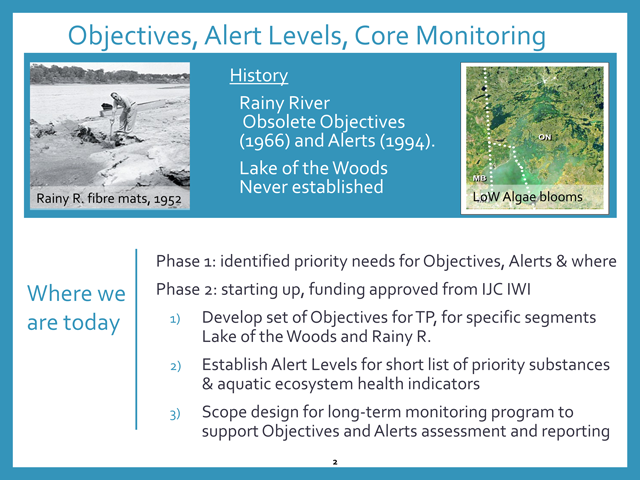
 The Lake of the Woods Water Sustainability Foundation plays an essential role in coordinating the network of resource management agencies, government partners, and civil society contributors to watershed science and governance. This year, our coordination has been instrumental in driving forward the second phase of a project to develop recommendations for international water quality Objectives and Alert Levels for the Rainy-Lake of the Woods Watershed. The International Joint Commission has oversight responsibilities for water quality in our watershed, so this project will be administered by the IJC watershed board’s Aquatic Ecosystem Health (AEH) Committee, which is co-chaired by the Foundation Executive Director, Todd Sellers.
Objectives are international standards agreed to by Canadian and U.S. governments for boundary waters. Alert Levels are IJC watershed board-adopted trigger thresholds for advising the IJC and governments of issues of potential concern, where there are no international Objectives established.
IJC Water Quality and Exceedance Report Coming this Fall
Until international phosphorus objectives are agreed to by governments, the IJC watershed board has adopted an interim approach of reporting on exceedances compared to the most stringent water quality criteria used by local state, provincial, or federal agencies for these shared waters.
The IJC watershed board’s Aquatic Ecosystem Health Committee co-chaired by LOWWSF’s Todd Sellers, is leading the IJC International Rainy-Lake of the Woods Watershed Board’s current compilation of its annual water quality exceedances report. The report draws on monitoring data provided by federal, state and provincial, and Indigenous agencies and will focus on phosphorus and related algae levels on Lake of the Woods and Rainy River, the principal water quality issues of international concern. Phosphorus is the primary nutrient feeding algae blooms and phosphorus loadings to the lake and its main tributary, the Rainy River, has been the focus of intensive studies by Minnesota and Canada.
The report will also present a summary of exceedances or spills (if any) of the permitted wastewater facilities discharging into the Rainy River and Lake of the Woods.
The report should be completed and submitted to the IJC in late fall – we’ll let you know when it is available and have a summary of findings on the Foundation website.
Algae Bloom 2023 is on its way
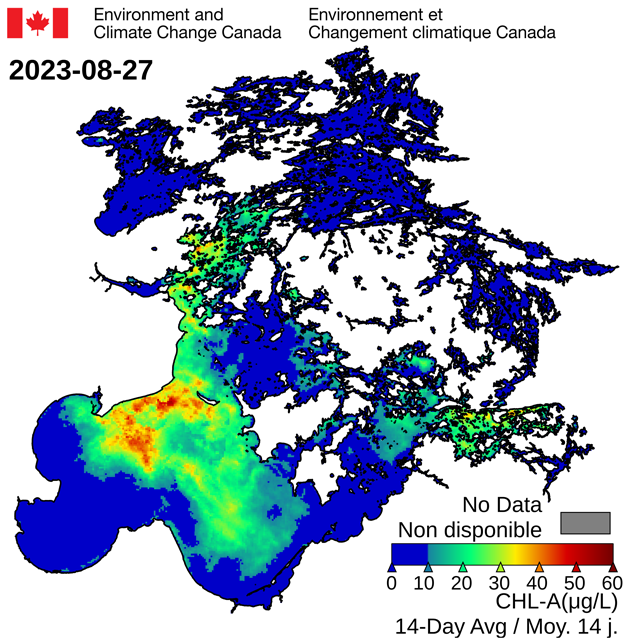
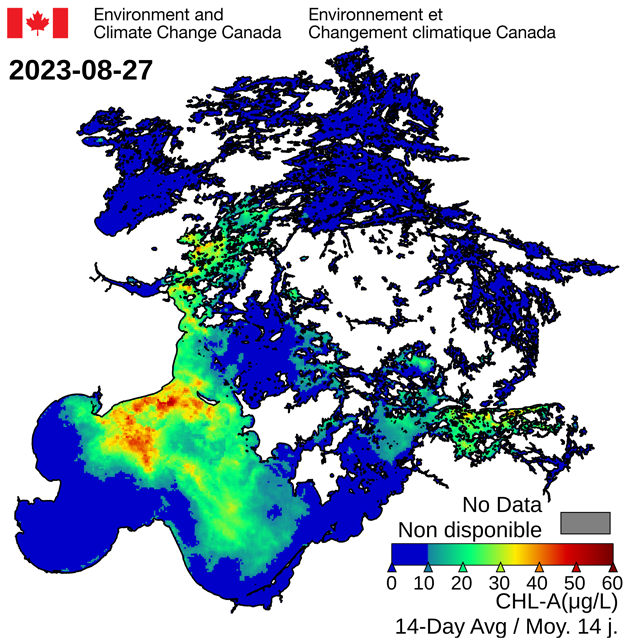 After a hot June but cool and sometimes smoky July, the algae bloom on Lake of the Woods started to develop in late July and early August as usual. Blooms began in the southern Big Traverse Bay and in the Morson-Sabaskong area to the south-east. By late August, the bloom covered 34% of the lake and has progressed northward through middle channel to Oak Point. Satellite-derrived measures of chlorophyll-a (a pigment in the algae) ranged above 40 µg/L (red in the satellite image) indicating severe bloom formation in a few locations (anything above 10 µg/L is considered a bloom).
Algal blooms in Lake of the Woods typically peak in the late fall, and progress into the north-central area of the lake. Thus, more extensive blooms are expected to come later, expanding in extent and severity into the fall. Last year, peak severity occurred on October 13, 2022. We’ll have a complete report on the annual bloom conditions later in the fall, once the satellite tracking is complete for the season.